Look down. Do you see the black limestone tiles that form a border around the hallway?
Take a closer look. Can you find the fossils of early sea life trapped in the tiles?
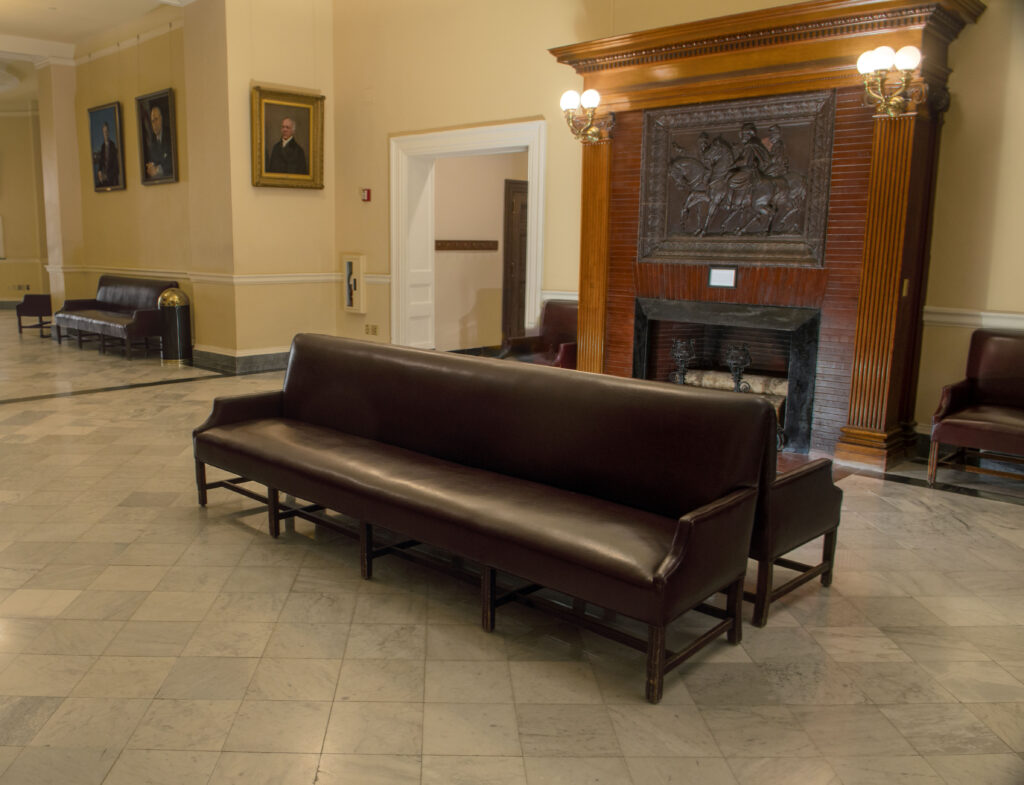
Four fossil types or phyla are found in the black limestone tiles lining this hallway: Echinodermata, Mollusca, Coelentera, and Bryozoa.
Joe Phelan photo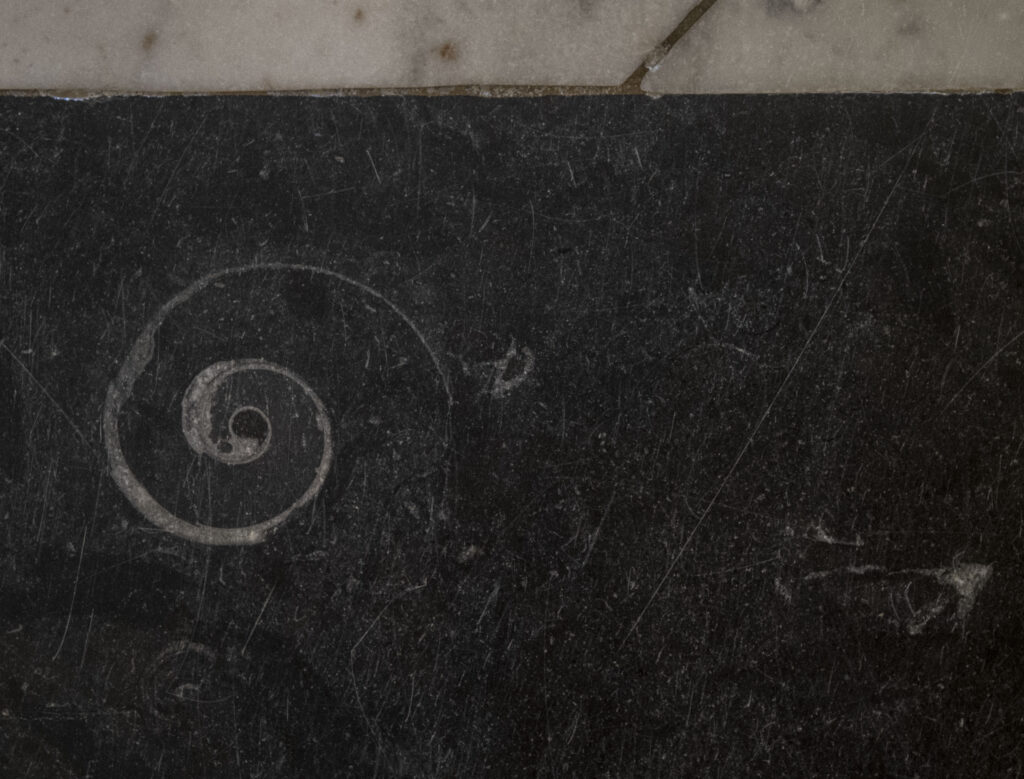
This fossil in the Mollusca Phylum or family is called Maclurite. Easily identified by its distinctive spiral shape, it is the most common and easily spotted fossil found in the back limestone tiles.
Joe Phelan photo
Some fossils preserved in the limestone tiles are over 475 million years old. The limestone for the tiles comes from Isle La Motte, Vermont, and were installed in 1891.
The fossils show evidence of creatures that died in rivers or ancient oceans and quickly sank into the mud below. Once buried, the animal’s body tissues were slowly replaced with minerals dissolved in underground water. Over millions of years, layers of minerals built up and hardened into sedimentary rock capturing the fossils between the layers. These fossils are related to present-day corals, sea anemones, jellyfish, starfish, and sea urchins.

