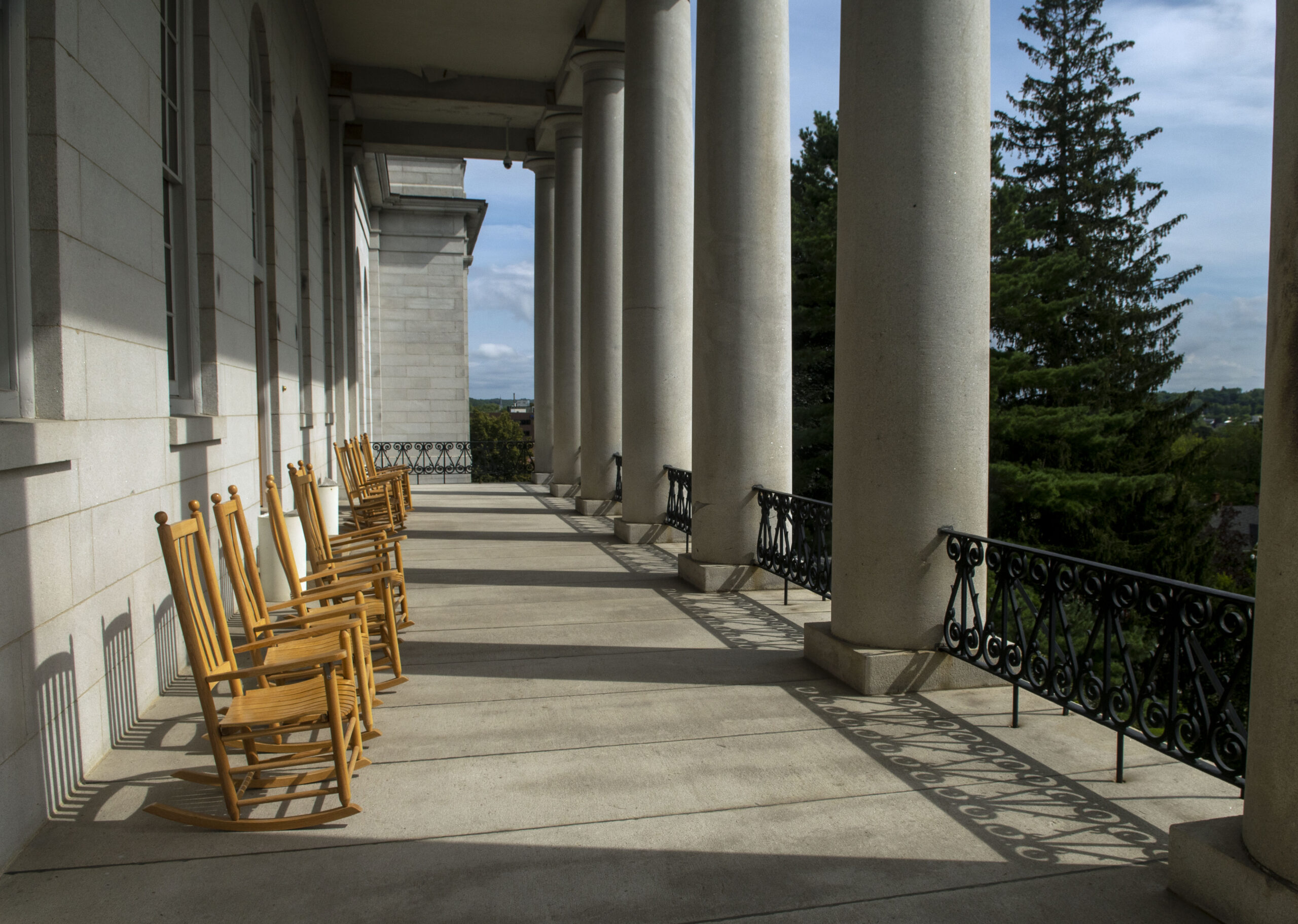

This veranda or porch is part of the original 1832 State House. Like other government buildings at the time, the original structure was inspired by temples in ancient Rome and Greece. Known as the Greek Revival, this style often included imposing columns, triangular pediments, and entrances framed by impressive porches.
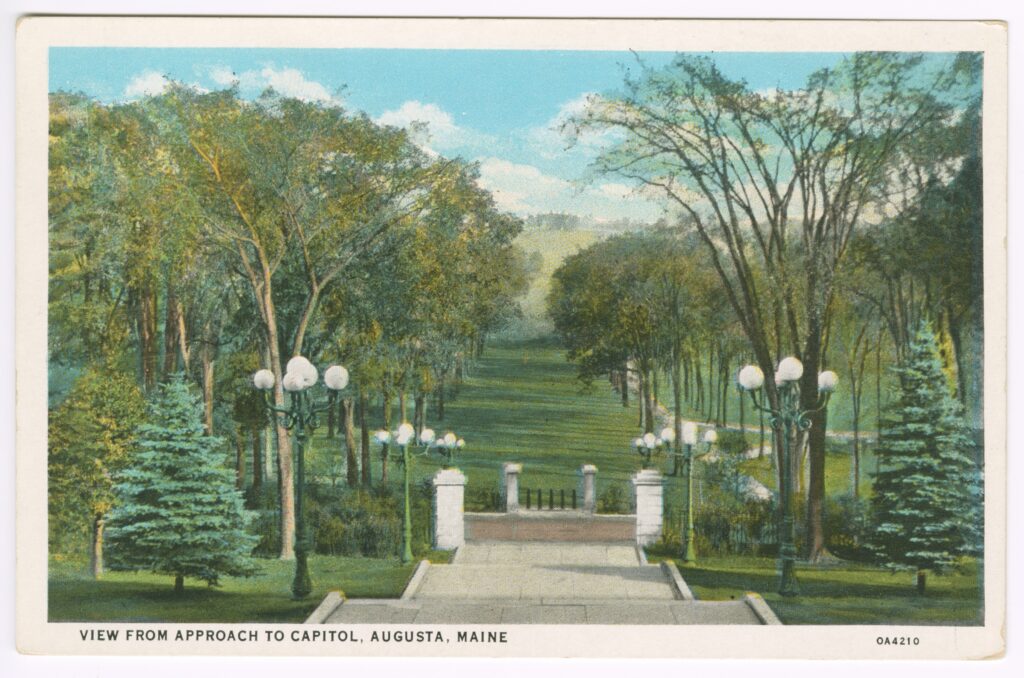
Maine Historic Preservation Commission Collection
Charles Bulfinch, the architect of the original State House and the surrounding grounds, envisioned a green space to hold public events that would offer dignified views of the building. The 20-acre rectangular park fulfilled Bulfinch’s vision. During the American Civil War, trees were cut, and the park was used by the Maine militia as a camp and parade ground. After the war, it was leased out for farming until 1878, when it was restored to its former appearance. Capitol Park was placed on the National Register of Historic Places in 1989.
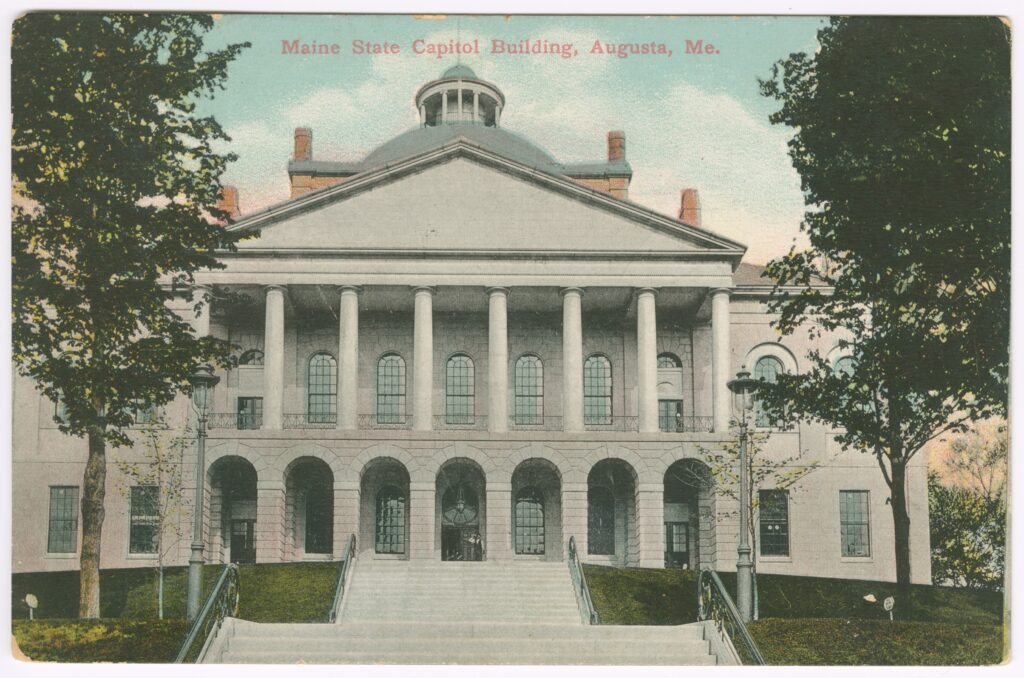
Maine Historic Preservation Commission Collection
LEARN MORE
In 1920, Maine Gov. Carl Milliken engaged a Brookline, Massachusetts firm to propose a plan for the grounds of the State House, governor’s residence, and Capitol Park. Architect Carl Rust Parker developed the plan and proposed that the park be divided in two, half for quiet reflection and half for active enjoyment. Parker’s plan called for a bandstand, tennis courts, a garden with native trees and shrubs, a zoo with native animals, and a path to the Kennebec River. What a different place Capitol Park would be today if those grand plans had materialized!